hotel-xenia
  • Home
  • Vesuvian Inn
    • Camere
    • Sale per la convivialità
    • Eventi
      • Eventi e cerimonie al Vesuvian Inn
      • Eventi in giardino panoramico al Vesuvian Inn
      • Convegni
  • Vesuvian In Tour
    • Esperienze al Vesuvian Inn
      • Laboratorio didattico di scavo archeologico simulato
      • Laboratorio didattico di affresco pompeiano
      • Laboratorio didattico di ceramica antica
      • Laboratorio didattico storia delle tradizioni popolari
      • Laboratorio didattico e spettacolo di teatro
      • Laboratorio didattico di arte presepiale del ‘700 napoletano 
      • Laboratorio didattico di mosaico
    • Escursioni e pacchetti turistici
    • Corsi & Turismo Culturale
      • Corso di archeologia vesuviana
      • Corso di lingua e cultura italiana
      • Corso di dieta mediterranea
  • Istruzione
    • Università
      • Università ed Enti Partner
      • Center for Study Abroad
    • Scuole
      • Viaggi di Istruzione
      • Visite guidate e Campus Day
      • Scuola Estiva – Lingua & Cultura Italiana
  • Fondazione RAS
  • Blog
  • Faq
  • Contatti
  • it
    • en
    • it
università

[:it]Vesuvian Archaeology [:en]Ves[:]

'

[:it]

cultura Campania turismo

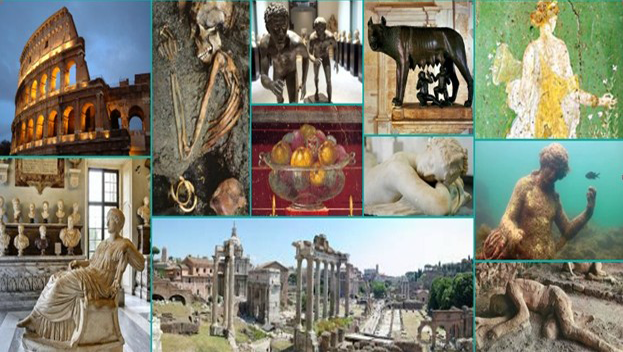
The course aims to emphasize the importance of those cultural roots, which have brought together various people and civilizations, and have come to represent a funding element of Europe. The course introduces participants to the Roman civilization and culture by stressing its crucial influence on the subsequent development of the European states. The archaeological sites of the Vesuvian area (Pompeii, Herculaneum and Stabiae – among the most visited in the world) and various aspect of Roman culture (architecture, cooking, fashion and beauty, music) will be investigated. This experience will allow participants to learn more about their roots, while understanding the theory and the practice of the archaeological field. It will also help them form a more comprehensive view on the world they live in, and appreciate Italy in its historical context. Participants will take away all they have learned from this course, and find it relevant in many aspects of their lives outside of Italy.

OBJECTIVES

To introduce participants to the architecture, history and cultural aspects related to the Romans

To stress out the importance and the influence of Roman culture in Europe

To encourage all participants to exchange personal experiences

To lead participants to connect the theory and the experience in teaching and in the educational process

To introduce the bay of Naples as a territory of further destination for art courses and travels

METHODOLOGY

The methodology is based on both theory and practice. Rather, the theory will offer participants the tools they need to build a strong understanding of sites and their history once they are there.

The project is based on learning and experiencing on site, involving participants in workshops and visits around the region Campania with skilled guides and experts in the field, in addition to high-quality lectures and classroom sessions.

Manuals with learning activities to complete will be provided.

Participants will make themselves familiar with the Roman culture and its history in a fun and enjoyable environment. By learning about this ancient society and by getting to know the aspects of its daily life, participants will become engaged and interested. This methodology allows for participants to connect their lives with the culture of ancient civilizations, and come away with a better understanding and appreciation for both the Roman and the European culture, history and society.
This will be a very-much outdoor based course as the participants will be visiting various sites. Highly qualified guides and trainers will ensure an easy approach to art, maintaining, at the same time, a high level of education. The course will be based on the balance between theory and shared experience, and on the participants´ active contribution to discussed subjects and themes.

I DAY

Arrival

8.30pm Welcome dinner at Vesuvian Inn

DOWNLOAD THE BROCHURE

II DAY

7.30 – 8.30am
Breakfast

9.00am – 11.00am
Introductory meeting with professor

Lecture: Archaeology in the Vesuvian area: history of the excavations, Stabiae and the villas of pleasure (otium, in Latin) from the Bourbon era to present day

11.00am – 12.30am
Ceramic workshop

13.00 pm
Lunch at Vesuvian Inn

15.00 pm
Tour of the Villas at Stabiae

8.30pm
Dinner at Vesuvian Inn

DOWNLOAD THE BROCHURE

III DAY

7.30 – 8.30am
Breakfast

9.00am – 11.00am

Lecture: Introduction to Roman everyday life through the archaeological discoveries in Pompeii. The domus and its wall-paintings.

11.00am – 12.30am
Pompeian fresco workshop

13.00 pm
Lunch at Vesuvian Inn

15.00 pm
Tour of Pompeii

8.30pm
Dinner at Vesuvian Inn

DOWNLOAD THE BROCHURE

IV DAY

7.30 – 8.30 am Breakfast

9.00 -11.00 am

Lecture: Introduction to Herculaneum: the chronicles of the eruption by Pliny the Younger; the ship of Herculaneum and the skeletons found on the beach; the site and the Villa of the Papyri.

13.00 pm
Lunch at Vesuvian Inn

15.00 pm
Tour of Herculaneum

8.30 pm
Dinner at Vesuvian Inn

DOWNLOAD THE BROCHURE

V DAY

7.30 – 8.30 am
Breakfast

9.00 am
Tour of Oplontis

Packed lunch

Free afternoon in Sorrento

8.30 pm
Dinner at Vesuvian Inn

DOWNLOAD THE BROCHURE

VI DAY

7.30 – 8.30 am
Breakfast

9.00 am
Departure for Naples

Visit to the Archaeological Museum of Naples

Lunch in Naples “Pizzeria”

Afternoon
Tour of the historical center of Naples

8.30 pm
Dinner at Vesuvian Inn

DOWNLOAD THE BROCHURE

VII DAY

7.30 – 8.30 am
Breakfast

9.00 am
Departure for Mt. Vesuvius

Packed lunch

Return to Vesuvian Inn

Free time

8.30 pm
Dinner at Vesuvian Inn – Final certificates ceremony

DOWNLOAD THE BROCHURE

VIII DAY

7.30 – 8.30 am
Breakfast

Departure

RATE IN € FOR ACCOMMODATION, ALL MEALS, COURSE, TRANSFERS from and to Naples (Station or Airport) and for ALL EXCURSIONS, TICKETS ENTRY TO THE SITES and GUIDE SERVICE: 710,00 €
Single supplement: 10 € per day.

REGULATION: the courses can start only if a minimum number of (10) participants is reached. If the number is not reached, exceptions will be considered.

Maximum number of participants: 18.

RATE IN € FOR ACCOMMODATION, ALL MEALS, COURSE, TRANSFERS from and to Naples (Station or Airport) and for ALL EXCURSIONS, TICKETS ENTRY TO THE SITES and GUIDE SERVICE: 585,00 €
Single supplement: 10 € per day.

REGULATION: the courses can start only if a minimum number of (20) participants is reached. If the number is not reached, exceptions will be considered.

Maximum number of participants: 40.

ASK FOR INFORMATIONS
    Preso atto dell'informativa al trattamento dei dati personali, l'utente:

    [:en]

    Nel corso del 2010 sono stati stipulati accordi di collaborazione, oltre che con alcune delle più importanti università italiane (Federico II e Università L’Orientale di Napoli, Scuola Normale di Pisa, Università del Molise, Università Bicocca di Milano, Centro ASK Bocconi), anche con  alcune prestigiose università straniere, quali l’Universidad Complutense de Madrid e l’Università di Vladimir, in Russia. 

    Tali accordi sono finalizzati, tra l’altro, all’attivazione di corsi universitari condivisi finalizzati all’ottenimento di crediti formativi, validi in tutti gli ordinamenti, attraverso lo study abroad ed il distance learning, in vista della realizzazione di uno dei progetti più ambizioni della nostra fondazione: la costituzione di un vero e proprio Center for Study Abroad (CSA), ovvero un centro adeguatamente strutturato per accogliere studenti stranieri che vogliano effettuare in Italia periodi di study abroad, grazie anche alla possibilità di usufruire di una location – il Vesuvian Institute – presso la quale studiare e soggiornare allo stesso tempo.

    Roman Culture in the Vesuvian Area: the Roots of European Culture

    The course aims to emphasize the importance of cultural roots which have brought together various peoples and civilizations, and have come to represent a fundamental element of European heritage. The course introduces participants to the foundations of Roman civilization and culture, as they came to be the primary influence of the development of the European states.
    The importance of the archaeological sites of the Vesuvian area (Pompeii, Herculaneum and Stabiae -some of the most visited archaeological sites in the world) and the influence of aspects of Roman culture (architecture, cooking, fashion and beauty, and music), offer participants the opportunity to investigate the roots of the traditions that have been so important and influential in the foundation of European history and culture.
    This experience will deepen participants’ understanding of the theory and practice of archaeology in the field. Participants will enjoy an experience that will shape their world view and help them to understand Italy within its historical context.

    OBJECTIVES

    • to introduce participants to Roman art, architecture, history and culture;
    • to stress the importance and influence of Roman culture within the development of European culture;
    • to encourage the sharing of personal experiences both between participants and with lecturers;
    • to connect theory and practical experience in teaching and educational processes;
    • to introduce the Bay of Naples as a destination for further art courses and trips;
    • to introduce participants to history, folklore, culture, linguistics, art, architecture and archaeology with Roman influences.

    METHODOLOGY

    The course methodology is based on a balance between both theory and practice and on the participants’ active contribution in the discussion of subjects and themes. The theory will offer participants the tools they need to build a strong understanding of the site and its history, which will be put into practice upon arrival at the site. Participants will take part in guided tours to the archaeological sites, where they will be given audio information and manuals with learning activities to complete. The lectures, led by qualified archaeologists, will focus on significant and interesting aspects of European culture and Roman civilization.
    However, the goal of the course goes beyond its methodology: participants will learn about Roman culture and history in a fun and enjoyable environment. Exploring the aspects of daily life in the ancient world will engage and maintain the interest of participants. This methodology allows participants to find a connection between their own lives and ancient Roman culture in order to develop a better understanding and appreciation of Roman culture, history and society.
    The project is based on on-site learning and experiences through direct involvement in workshops, visits in the region accompanied by guides and field experts, lectures and intensive classroom sessions.
    This is very much an outdoor course in which the participants will visit various sites. Highly qualified guides and trainers ensure a simple approach while simultaneously experiencing a high level of education.

    PROFESSOR Dr. Paolo Gardelli

    Specializing in Classical Archaeology at the University of Padua, and a graduate in Conservation of Cultural Heritage at the University of Bologna, Dr. Paul Gardellihas held lectures in Vesuvian archeology for both the Moscow State University and the Vladimir State University in Russia.
    Dr. Gardelli is an accredited professor under the EU Life Long Learning Comenius/GrundtvigProgram with a focus on Greek and Roman Culture and Pre-Roman Archaeology. He has gained extensive excavation experience through digs in the ancient Roman city of SuasaSenonum, CastelleoneSuasa(An), the archaeological excavation of a residential complex of the Roman spa, Abano(PD) and the archaeological excavation of an emerging stretch of old Via Aemilia.
    He is currently the Co-Director of the archaeological excavation project and restoration and architectural survey carried out at the spa district of the Roman Villa of Ariadne in Castellammare di Stabia, acting on behalf of the NGO Restoring Ancient Stabiae Foundation in collaboration with the State Hermitage Museum in St. Petersburg and under the direction the Archaeological Superintendence of Naples and Pompeii.
    DOWNLOAD THE BROCHURE

    Italian Language & Culture: Level 1 - Beginners

    The main aim of our Italian language and culture courses is to offer to foreign students, who don’t speak Italian, the basis of our language, grammar and vocabulary in order to teach them how to communicate in all situations of daily life. The courses will be organized in different levels, starting from a general introduction to Italian, focused on the study of the main structures of the spoken and written language and of most common uses.
    LEVEL 1: BEGINNERS
    This is a general introduction dedicated to beginner students and aimed at familiarizing with the acquisition of Italian language. Phonetics, the foundation of grammar structures and verbs are introduced with attention to their actual use in an authentic linguistic context.
    COURSE MAIN AIMS: 
    To provide students with basic skills in understanding the spoken language through the use of an appropriate vocabulary related to specific situations
    To acquire the basic structures to communicate
    To be able to comprehend and write short paragraphs
    LEARNING OUTCOMES:
    • To become aware of the basic structures of the grammar.
    • To be able to use the acquired grammar rules in authentic linguistic contexts.
    • To be able to ask simple questions and make simple statements.
    • To develop basic reading and comprehension abilities.
    • To be able to understand uncomplicated sentence-length and paragraph-length statements.
    • To develop basic writing abilities.
    • To build up an essential vocabulary.
    TEACHING METHOD:
    The teaching approach is comprehension-based. Participation and team working ability are encouraged in class. The role of the language professor is not only to provide the students with information, rules and correction of mistakes but also encourage them towards a challenging linguistic experience. Priority is given to comprehension and language production.
    Each lesson  must respect the following points:
    • General introduction to Italian language.
    • Main structures of Italian language.
    • Common uses and situations.
    • How to say/ how to translate.
    During the course, the professor will check students’ level of comprehension and learning through written and oral tests and homework assignments. At the end of the course there will be a final written and oral examination.
    CLASS ACTIVITIES:
    Learning Italian with songs.
    Watching Italian movies with subs.
    Role-plays.
    Playing with language and words.
    RECOMMENDED: 
    – Italian/English Dictionary;.
    – Texts and exercises will be given by the professor during the lessons.
    PROFESSOR Dr. Antonia La Torre 
    Antonia La Torre is a PhD Doctor in Contemporary Italian Literature. Currently she is a teacher of General Linguistics and Glottology for the bachelor degree in Translation and Interpreting and a teacher of Italian Language and Culture to foreign students. She is also teaching assistant for the courses of Theatrical Literature and Contemporary Italian Literature in the Department of European Linguistic and Literary Studies of the University of Naples “L’Orientale”. Her research activities and her main publications deal with Contemporary Italian Literature . They are principally centred on the relationship between Literature and Cinema and in particular on the analysis and critique of the screenplays written by Cesare Zavattini and Pier Paolo Pasolini. Other research interests include the study of Dino Buzzati’s short novels (in collaboration with “Dino Buzzati” Archive), the presence and influence of Dante Alighieri and Giovanni Boccaccio in Pasolini’s Cinema, the role of poetry in the Italian review «Officina». She is also a Member of committee for the examination in Italian Language and Culture for foreign citizens and Italians living abroad of Contemporary Italian Literature degree course on-line, held on July 2008 by ICON (Italian Culture on Net) in consortium with University of Naples “L’Orientale”.
    DOWNLOAD THE BROCHURE

    Architectural Conservation: the future of the past

    The term architectural conservation addresses the issues involved of prolonging the life, integrity and character of architectural constructions, with a focus on form and style, and on constituent materials including stone, brick, glass, metal, and wood. In this case, the term refers to the ‘professional use of a careful balance of science, art, craft, and technology as a preservation tool’ within the fields of historic environment conservation and art preservation.
    Objectives:
    Our goal is to provide students with both a theoretical and practical knowledge of methods used, in order for them to work successfully on historic buildings whilst using technical eqipment. There is an important focus on structures and materials such as bearing walls, reinforced concrete and steel, both for simple and mixed systems. Students will be trained in analysis and diagnosis of the causes of degradation, in intervention techniques for the recovery of materials, and in the use of technical equipment designed to reuse the building project. Particular attention will be given to the recovery techniques used in areas susceptible to seismic activity. The course also incorporates the development of a project which will enable application of the theoretical techniques presented in the lectures.
    Program:
    • Traditional building materials
    • Analysis of the evolution of traditional construction systems
    • Analysis of failures in masonry buildings
    • Analysis of failures in buildings made from reinforced concrete and metal structures
    • Analysis of traditional techniques and materials for recovery and restoration
    • Analysis of modern and innovative techniques and materials for recovery and restoration
    • Diagnostics for the preservation of historical buildings
    • Technology used for the recovery of walls, vaulted structures and wooden floors
    • Technology used for the recovery of concrete within frame structures
    • Technology used for the recovery of floors in reinforced concrete and in metallic carpentry
    • Technology used for the remediation of landslides as a result of moisture in the walls
    • Technology used for the recovery of plaster facades and stone cladding
    • Technology used for the recovery of decorative architectural details
    • Technology and regulations used when working with historic structures in places vulnerable to seismic activity
    • Introduction to fire safety in historic buildings.
    PROFESSOR Dr. Agostino Catalano
    Agostino Catalano graduated Civil Engineering at the University of Naples “Federico II” in 1984. And having specialized in fire prevention, in also a graduate of the School of Specialisation in Restoration of Monuments at the University’s Faculty of Architecture.
    In May 2003, Catalano co-founded OSSEVM, The Scientific Centre for the Study of Vernacular Building in the Mediterranean Basin, assuming the office of Treasurer.
    Since Semptember 1, 2008, Catalano has been the Associate Professor at the University of Molise, ad is a professor of technical architecture and design and technology for the engineering of fire safety and the preservation of building. Over the years he has participated in numerous national and international conferences  and has enjoyed several scientific publications.
    Agostino Catalano’s complete curriculum vitae can be found here:
    http://docenti.unimol.it/index.php?u=agostino.catalano&id=3


    HEALTH AND SAFETY CLOSED CAMPUS 
    In order to ensure the safety and security of all staff members, The Vesuvian Institute operates as a closed campus. All campus visitors are required to identify themselves to security staff, declare the purpose of their visit and report to the Main Office before being allowed access to their intended destination on campus.
    24-HOUR ASSISTANCE 
    A tutor will accompany students in order to solve any problems and accommodate special requests during the duration of the summer school. Each student will receive a handbook with safety instructions, city guide and emergency numbers.
    ORIENTATION 
    When students arrive at the Naples Airport, they will be met and transported to The Vesuvian Institute. Our staff will provide a thorough orientation with information about the local culture, including a review of country- and program-related safety and security guidelines.
    EMERGENCY CONTACT CARD 
    Students will be provided with emergency contact cards which will include a toll-free emergency number which is monitored 24 hours a day.
    STUDENT INSURANCE 
    Before arriving in Italy, we strongly recommend that students take out insurance for their own financial and personal security.
    DOWNLOAD THE BROCHURE

    Center for Study Abroad darà dunque la possibilità a strutture universitarie e di formazione di tutto il mondo, orientate all’archeologia e alla cultura italiana, di avere una sede temporanea, nel cuore dell’archeologia romana, con servizi di formazione a distanza e in presenza.

    In particolare si evidenziano gli aspetti fondamentali della Mission del Center for Study Abroad:

    • dare la possibilità agli studenti stranieri presenti presso il Vesuvian Institute di continuare a seguire a distanza i corsi delle università d’origine, garantendo in questo modo la continuità didattica;
    • dare la possibilità a studenti residenti in tutto il mondo di seguire lezioni specialistiche di esperti della RAS o di università di fama mondiale;
    • dare la possibilità di seguire meeting, seminari e master direttamente on-line con la possibilità di interventi da parte della platea virtuale;
    • dare la possibilità a esperti di fama mondiale di riunirsi on-line per discutere l’evoluzione delle ricerche scientifiche in campo archeologico.

    ASK FOR INFORMATIONS

      Preso atto dell'informativa al trattamento dei dati personali, l'utente:

      [:]

      Starting Price From / session

      Previous Service Next Service

      (+39) 08119557276 / 08119557362 / 3288495629

      info@vesuvianinn.com

      Via Solaro 13, 80053 Castellammare di Stabia Napoli

      © All rights reserved

      RAS Foundation – Italy Pleasure and Culture – IPC SRL

      P.IVA 07626091214

      Privacy Policy –  Cookie Policy

      Contattaci 


      Cerca nel sito